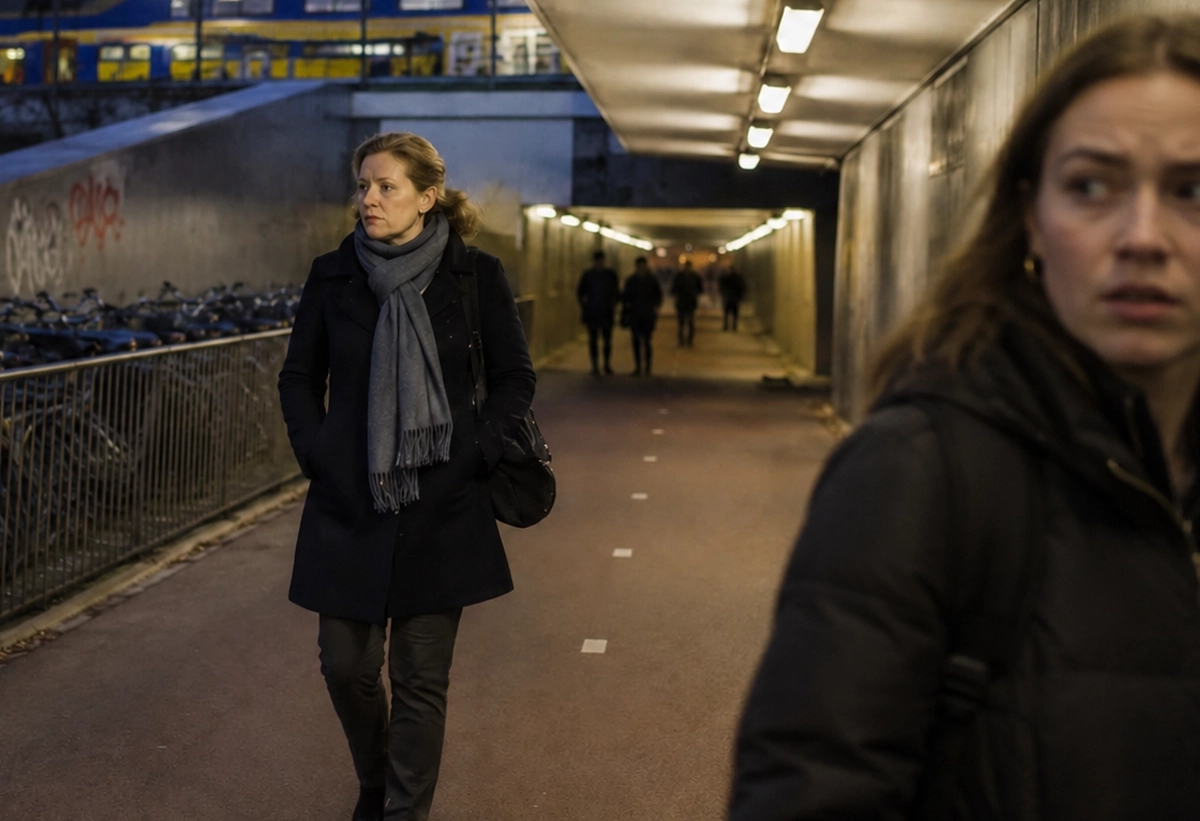
Women are more likely than men to take their safety into account in public space. Not because they are less independent or resilient, but because circumstances and behaviour can affect their freedom of movement. Taking a different route, leaving earlier, calling someone or avoiding a place are everyday considerations for many women that shape how freely they can move through public space.
What is experienced every day is not always visible to others. We therefore need insight into where, when and why women feel unsafe, which experiences stand alone and where patterns emerge.
Vrouwveiliger was founded from that conviction. Not to treat every signal as proof or to label places as safe or unsafe without context, but to examine perceived safety seriously and carefully.
Not every situation calls for the same solution. Sometimes the answer may lie in design, supervision or policy; sometimes in behaviour, social norms, upbringing or education. Meaningful change starts with understanding what is really happening.
A safer environment is not created by asking women to adapt even more, but by changing circumstances, behaviour and social norms.
Men are essential too: not as protectors, but as jointly responsible for what we consider normal and acceptable in public space. This requires listening, recognising behaviour, respecting boundaries and being willing to challenge one another.
Only together can we make public space safer for women — and therefore safer and better for everyone.