

Walking behind her?
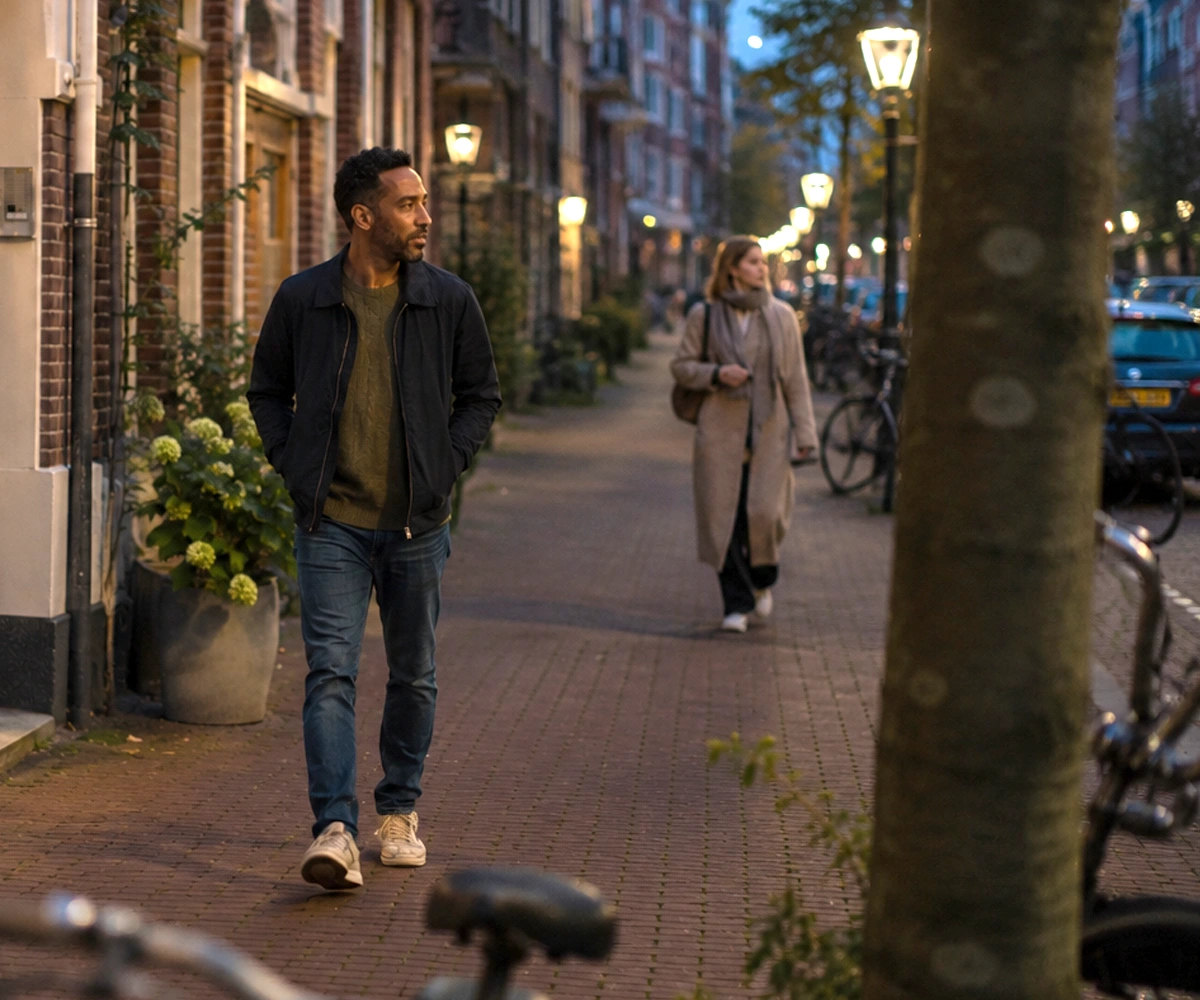
Give her space. Slow down, create more distance or cross the street when that is easy.
FOR MEN
1
You know you mean no harm. She cannot know that. A few small choices can remove unnecessary tension from an ordinary situation.
Give her space. Slow down, create more distance or cross the street when that is easy.
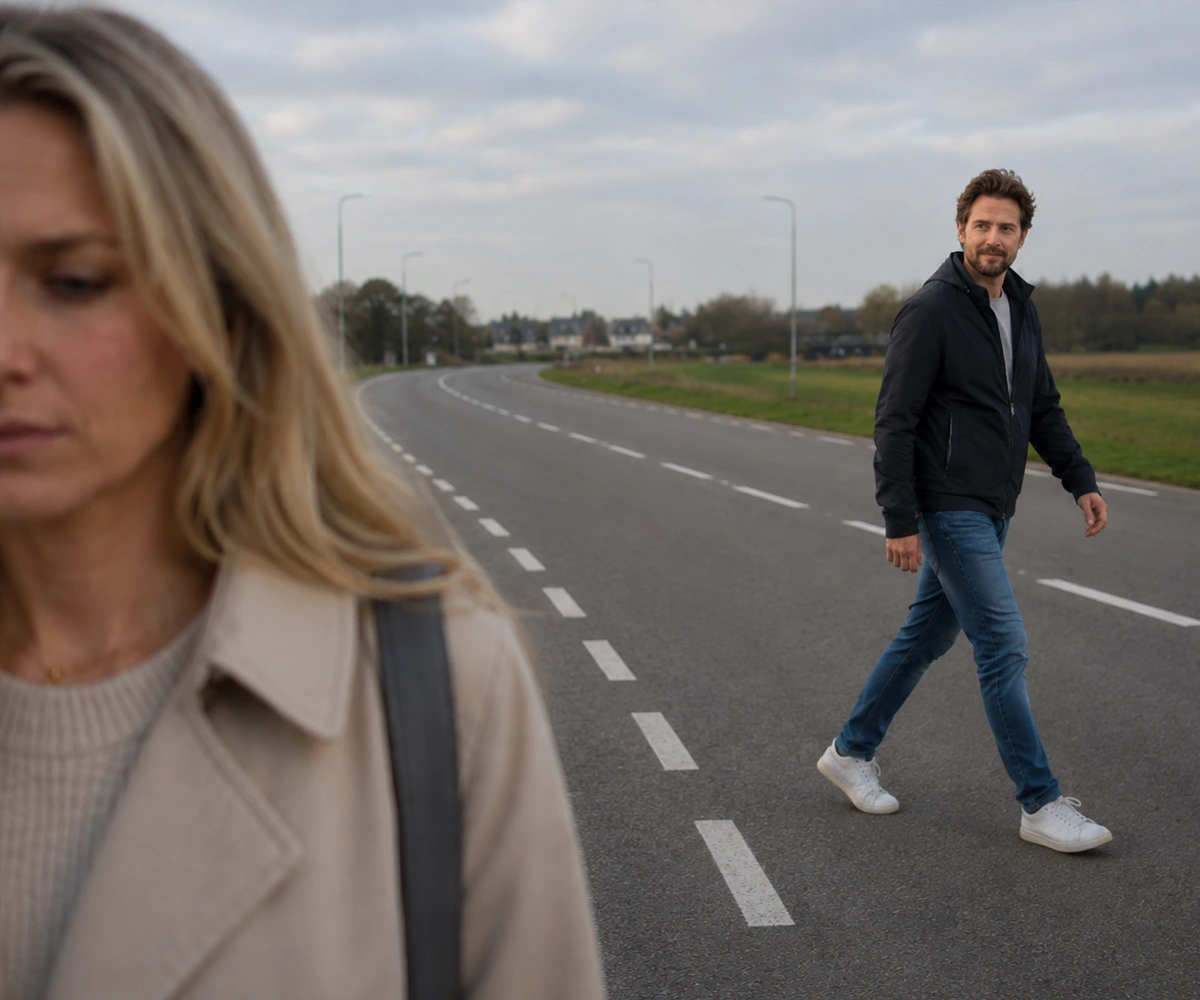
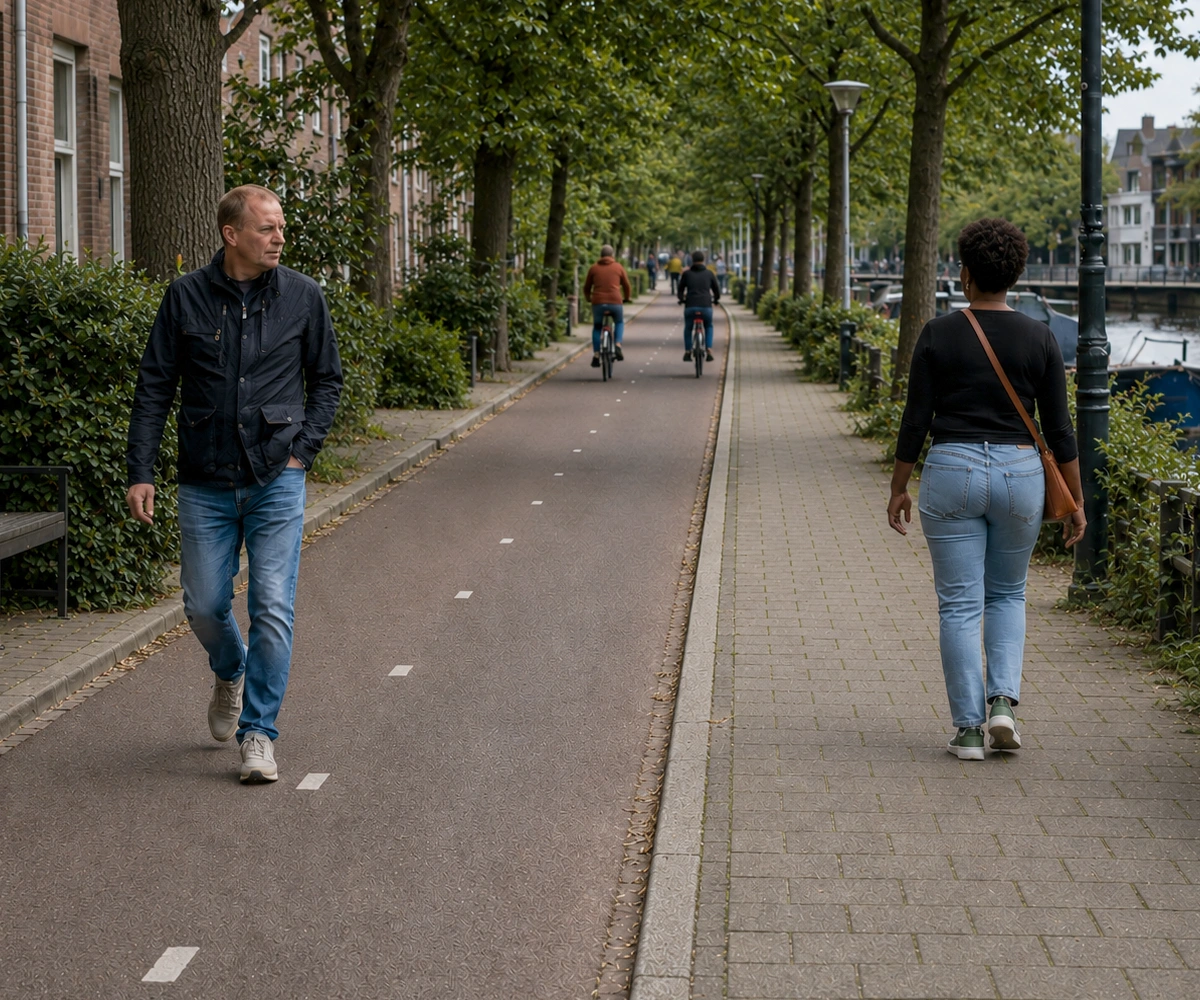
Do not linger just behind her. Pass clearly and with enough distance.
A glance is different from staring or repeatedly looking back. Leave it there.
No response, looking away or walking on is clear enough. Do not push it.
2
Do not overthink it. Give space. Be clear in how you pass. If she does not want contact, leave it there. What costs you almost nothing can make a real difference to her.
3
A social norm is also created among men. If someone shouts after a woman, keeps pushing after a rejection or makes her visibly uncomfortable, do not automatically laugh along or look away. Say something.
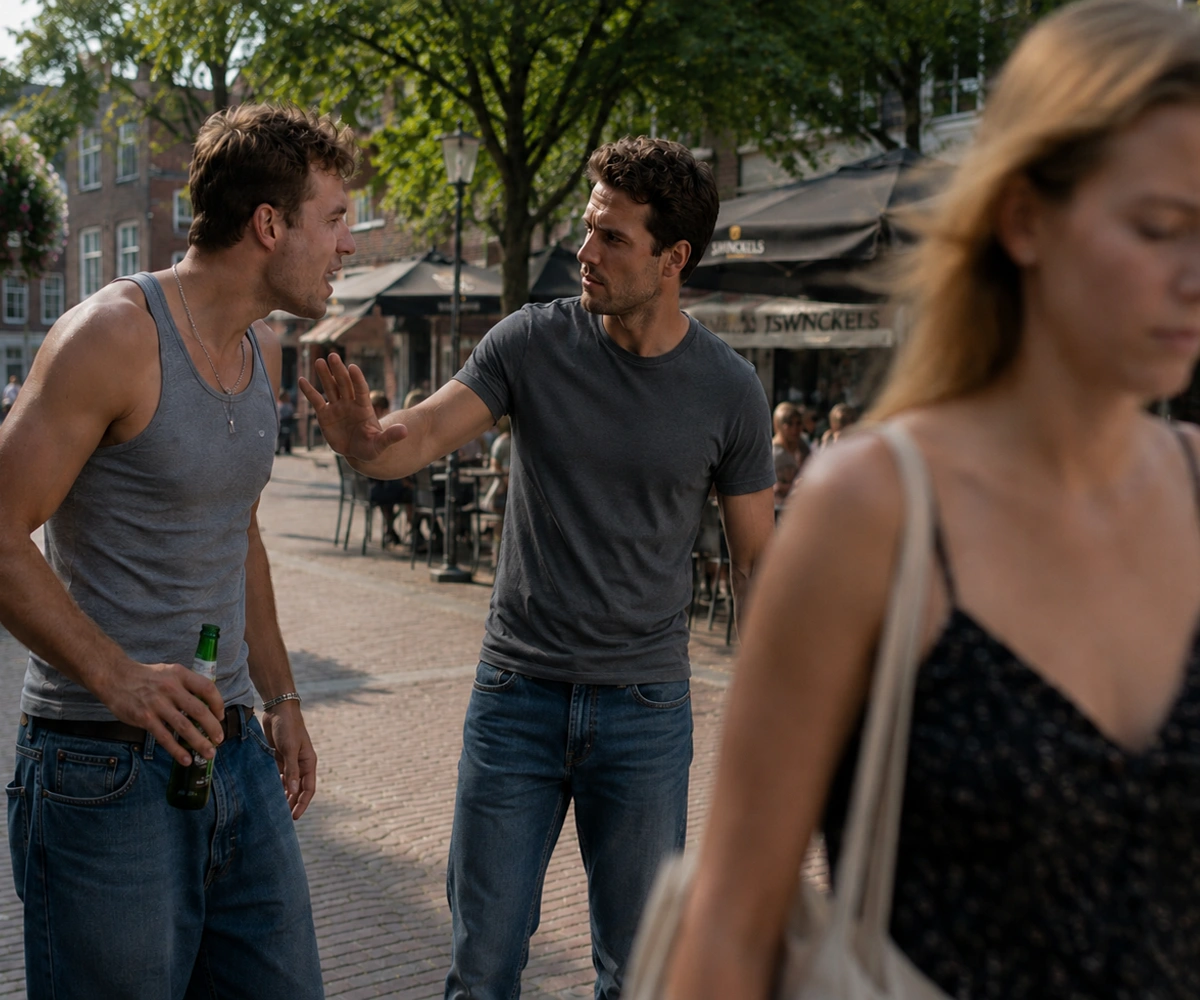
From considerate to a new normal. That is how social change begins.
4
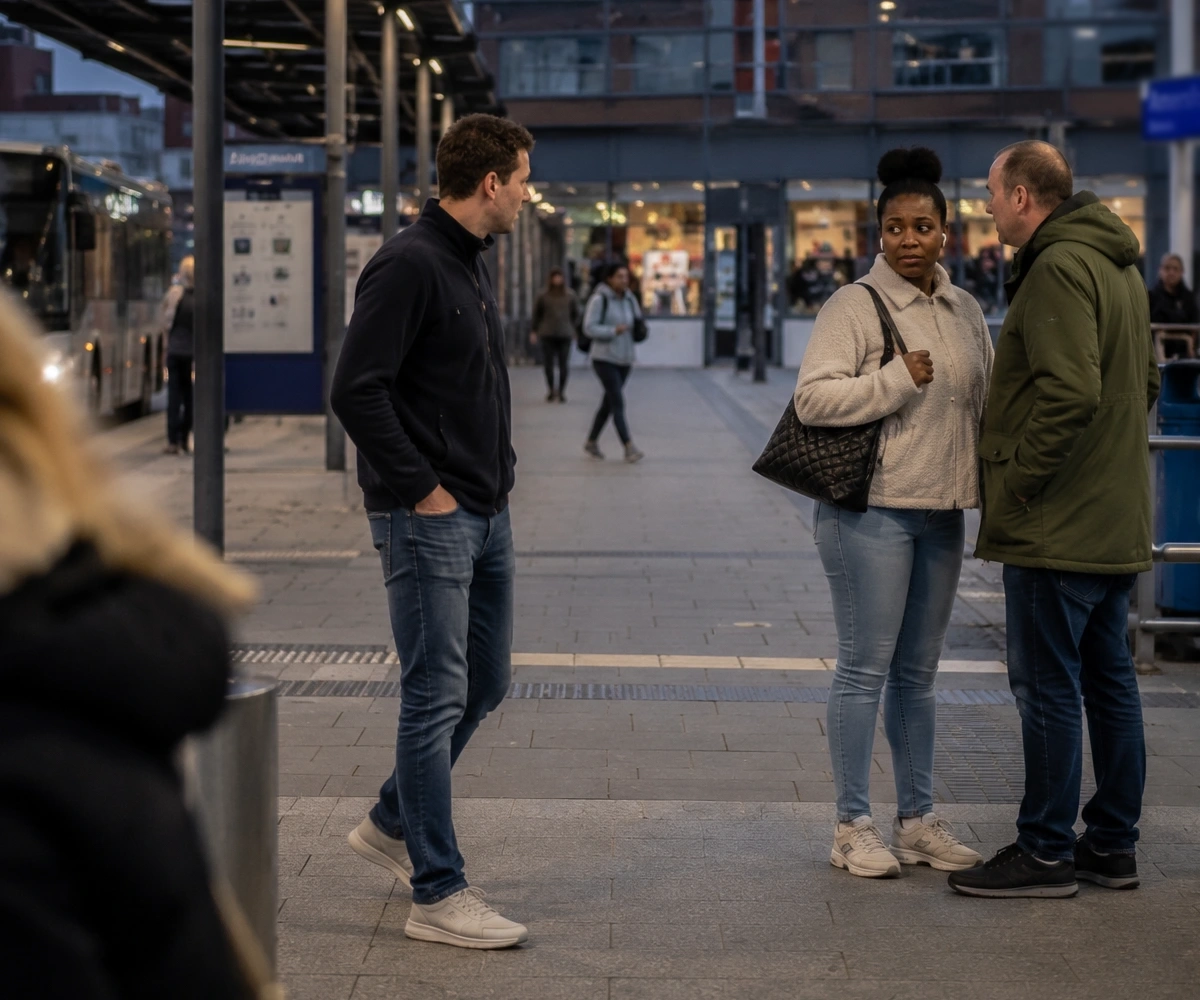
You do not have to play the hero. Make contact. Create a distraction. Get someone else involved. Ask whether she is okay. Help without taking control away from her.
Ask calmly: “Are you okay?” That alone can be enough to interrupt a situation.
An ordinary question or brief interruption can create an exit without direct confrontation.
If needed, involve staff, security, other bystanders or the police.
Play along calmly. She may be trying to get out of an uncomfortable situation. Let her decide what is needed next.
5
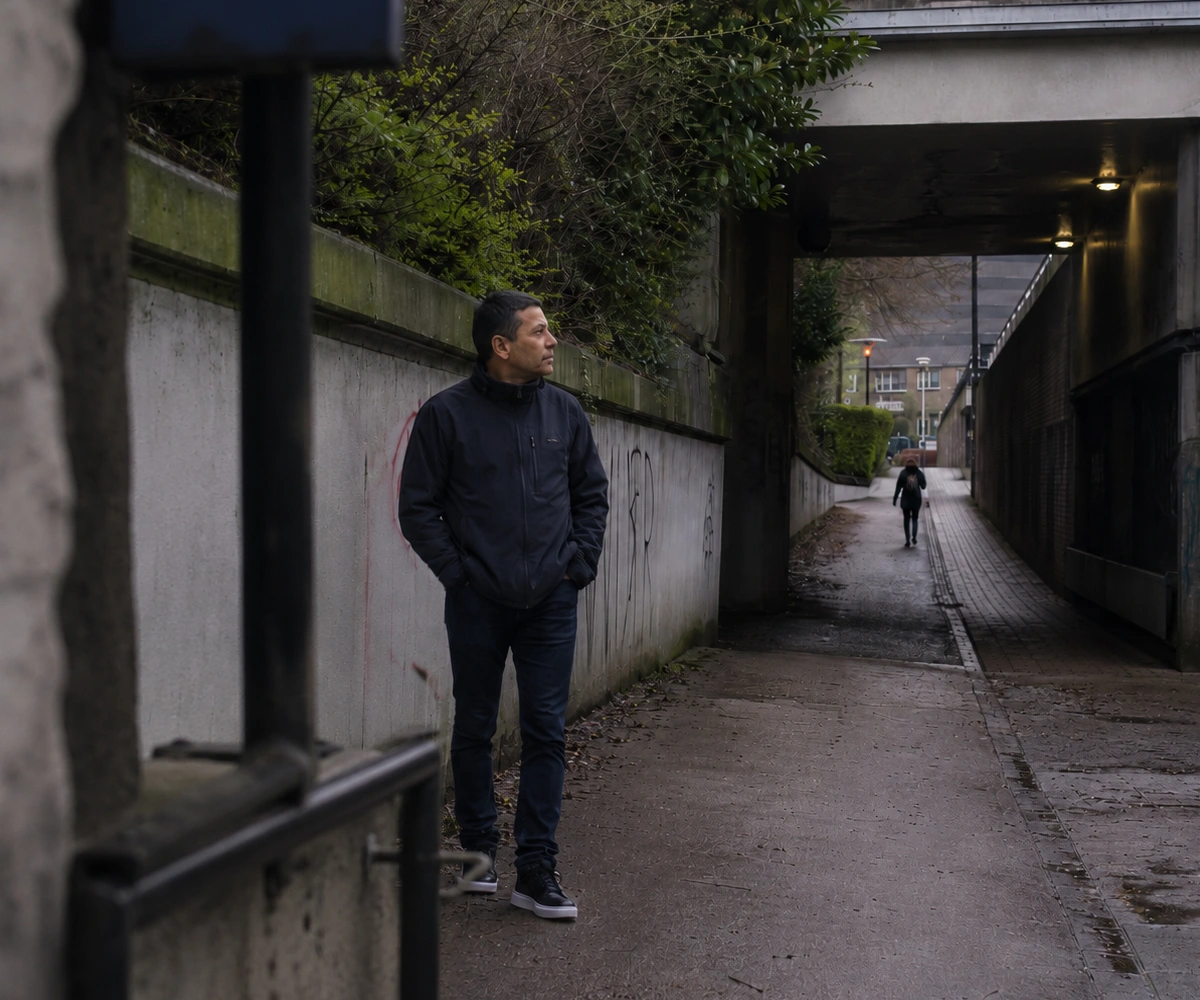
Would this place feel different if you were walking here alone as a woman?
Look beyond whether you personally feel safe. Notice the things that determine whether someone has overview, space and options.
6
You can also contribute through the Vrouwveiliger app. Notice a place, route or situation that could feel different or uncomfortable to women? Share it. Your perspective can help reveal patterns too.
Not for emergencies.
In case of immediate danger, call 112.
Sometimes no complicated intervention, expensive investment or years-long process is needed to make a difference. If more men naturally take women’s sense of safety into account, not just one situation changes. What we consider normal changes too.
A safer public space for women sometimes starts simply with how you move through it.
Enter the municipality your input relates to.
Noord-Holland
Available